 Author: Dr. Huzur KESKIN 06.29.2026
Introduction: Turkiye’s Decisive Role in the Geopolitical Chess Game
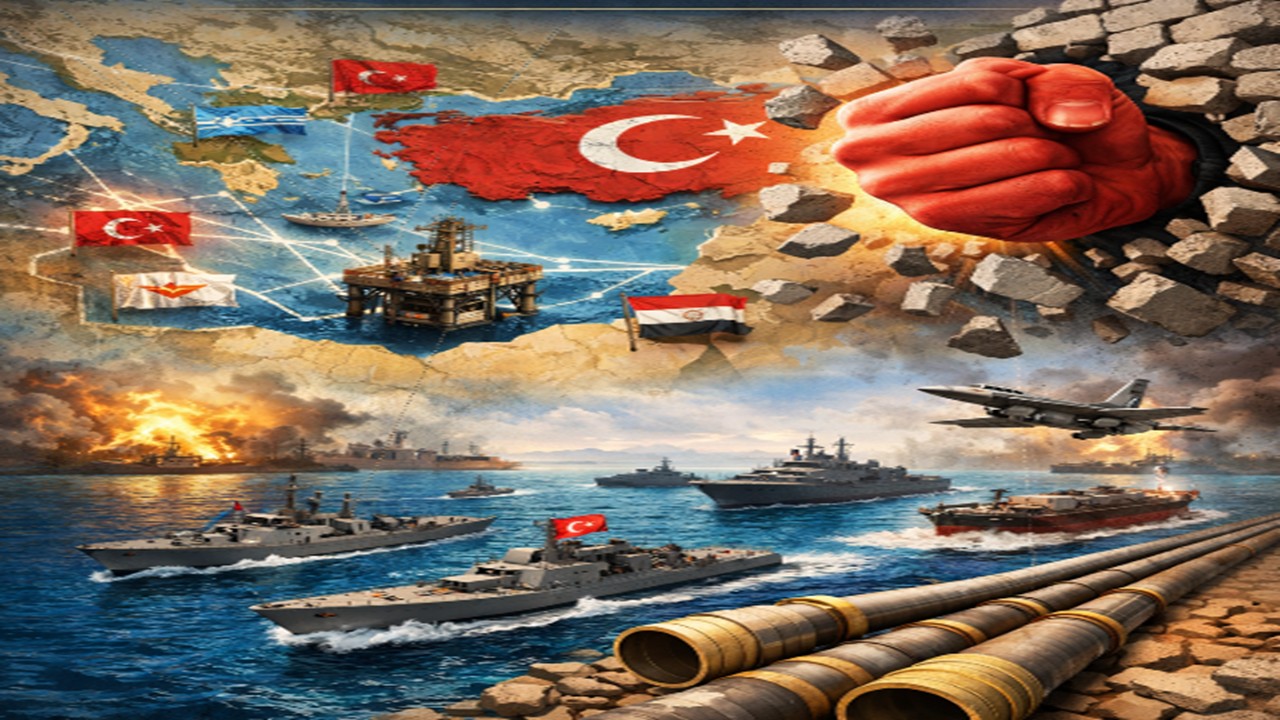
As the geopolitical map of the Eastern Mediterranean is being redrawn with the discovery of energy resources, Turkiye finds itself positioned as both the most significant actor and the most targeted country in this transformation. Its strategic location at the intersection of three continents, a coastline exceeding two thousand kilometers, and its historical depth make Turkiye the country with the most comprehensive maritime jurisdiction claim in the region. Since the beginning of 2026, particularly following the military operations launched by the US and Israel against Iran on February 28, and Iran’s subsequent retaliatory strikes against Western targets in the region, Cyprus has been placed directly in the line of fire, while Turkiye has emerged as an indispensable element of the regional security architecture.[1] The region’s natural gas reserves, exceeding three trillion cubic meters, hold vital importance for Turkiye both in terms of energy supply security and economic development. Structures such as the Eastern Mediterranean Gas Forum, which exclude Turkiye and the Turkish Republic of Northern Cyprus, institutionalized initiatives like the Eastern Mediterranean Gateway Act that bypass Ankara, and competition over energy transmission projects, demonstrate that regional equations cannot be sustained without Turkiye’s participation.
This study examines recent developments within the context of Turkiye’s energy strategy and economic objectives, analyzing how the multi-layered competition in the Eastern Mediterranean is shaped through energy infrastructure, military alliances, global trade corridors, and international sanction policies, as well as Turkiye’s decisive position within this equation. The main argument of the study is that Turkiye is neither a pure game-maker nor an actor that can be excluded from the game in the region; rather, it possesses the capacity to maintain its maneuvering space and transform regional balances in its favor by effectively utilizing asymmetric power cards such as Black Sea gas, deep-sea technology, and its geographical advantage in energy diplomacy.
Cyprus: From Frozen Conflict to the Search for a Flexible Solution and Turkiye’s Red Lines
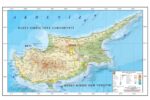
The deadlock in the Cyprus issue that has persisted since the 2017 Crans-Montana summit is showing signs of a remarkable transformation with the new diplomatic initiative led by the UN Secretary-General’s Personal Envoy, María Ángela Holguín.[2] According to information obtained by Politis newspaper, the model expected to be presented at a “5+1” conference planned for this summer is built upon a flexible formula that allows for different interpretations by both sides, unlike the classic “heavy federation” structure.[3] This model is designed in a way that the Greek Cypriot administration can interpret as “federation” while the Turkish Republic of Northern Cyprus can interpret as “confederation.” Its political essence is to bridge, through “constructive ambiguity,” the chasm between the “bi-zonal, bi-communal federation” persistently advocated by the Greek side and the “sovereign equality” and political status recognition emphasized by the Turkish side.[4]
Ankara approaches this process with utmost caution, evaluating the current negotiation parameters in terms of Turkiye’s national interests and the existence of the Turkish Republic of Northern Cyprus. According to Turkish foreign policy elites, past processes like the Annan Plan and Crans-Montana have proven that open-ended ambiguities gave the Greek side time, perpetuated isolations on the Turkish Republic of Northern Cyprus, and solidified the status quo against the Turkish side. Holguín is noted to be following a much more dynamic method than previous mediators, conducting comprehensive meetings not only with the two leaders but also with academics, civil society representatives, guarantor countries, and the European Union.[5] In this process, Turkiye insists on the registration of the Turkish Republic of Northern Cyprus’s sovereign equality and equal international status, arguing that a two-state solution on the island is without alternative.
While the formula taking shape at the table is based on a recognition-for-territorial-concession trade-off, Turkiye will not allow this trade to turn into an equation that works against the Turkish Republic of Northern Cyprus. On the territorial dimension, the Crans-Montana map is the basis of negotiations, with the aim of providing tangible gains to the Greek side through the return of specific parts of Maraş (Varosha), Güzelyurt (Morphou), and Mesarya (Mesaoria).[6] On the recognition dimension, the Turkish side demands that their political equality be recognized not merely at a rhetorical level but as a functional element of the new state. According to the plan shaped by Holguín, the proposed model describes a state structure with a “loose” relationship between two constituent states. Instead of the 120 shared competencies discussed in earlier stages, a radical reduction in shared powers is foreseen, with daily administration largely devolved to the two constituent states.[7] From Turkiye’s perspective, while this model is deemed worth examining for securing the Turkish Republic of Northern Cyprus’s autonomy in internal functioning, Turkiye insists on the condition that political equality and guarantor rights be tied to concrete guarantees.
On the guarantorship issue, Turkiye’s position is clear: it demands the preservation of the 1960 guarantor system or a long transition period for the withdrawal of Turkish troops from the island. While the Greek side insists on the complete abolition of guarantorship, it is reported that the UN is evaluating NATO as a middle ground on this matter. It is conveyed that during Holguín’s contacts in Ankara, this issue was not completely dismissed by Turkiye but was viewed as part of a more comprehensive solution.[8] Turkiye explicitly states that its military presence on the island is the guarantee of the Turkish Cypriot community’s security, and that no solution formula is acceptable without this assurance.
Energy Geopolitics and Turkiye’s Central Role
The energy equation in the Eastern Mediterranean underwent a significant transformation in Turkiye’s favor with the memorandum of understanding signed between Turkiye’s state oil company TPAO and American energy giant ExxonMobil at the beginning of 2026. The agreement covers new exploration areas in the Black Sea and the Mediterranean, as well as international potential fields. Minister of Energy and Natural Resources Alparslan Bayraktar explained the purpose of this cooperation as: “aiming to combine our technical capabilities in deep-sea exploration and drilling with ExxonMobil’s international experience to enhance our operational efficiency and pave the way for new discoveries.”[9]
According to an analysis in Forbes, this agreement should not be viewed merely as a commercial partnership but should be read on three different levels: commercial, diplomatic, and structural. The most striking aspect of the agreement on the diplomatic dimension is the inclusion of the Mediterranean component. The Greek Cypriot administration approaches this situation with concern; the agreement has triggered “alarm bells” in the Greek Cypriot community. According to the Forbes analysis, this move reflects Turkiye’s strategy of being seen not as an “excluded actor” but as a “part” of the Eastern Mediterranean energy geometry.[10] With this agreement, Turkiye has succeeded in integrating Western capital into its own energy vision and breaking the policies of exclusion in the region.
The technical correlation behind the deal demonstrates the scale of the strategic gain Turkiye has achieved. ExxonMobil seeks to partner with Turkiye’s proven deep-sea production technology and operational capability in the Black Sea’s Sakarya Gas Field. Turkiye, in turn, leverages its commercial attractiveness and production capacity in the Black Sea as a bargaining chip to overcome diplomatic deadlock in the Eastern Mediterranean. Thus, Exxon’s activities south of Cyprus are transformed from a military and political point of tension into a balancing mechanism between Ankara and Washington.[11]
Regarding how Eastern Mediterranean gas will be transported, the model proposed by Turkiye offers the most rational solution for regional energy supply security. In contrast to Egypt’s strategy of liquefying gas through its massive LNG facilities and selling it to the world via tankers, Turkiye positions itself as a “transit route, trading hub, and balancing market.” While the Turkiye-Turkish Republic of Northern Cyprus natural gas pipeline project constitutes the infrastructure pillar of this strategy, the ultimate goal is to integrate Eastern Mediterranean gas into existing pipelines such as TANAP and TurkStream through “reverse flow” mechanisms for transport to Europe.[12] This model offers Europe the shortest, safest, and most economical route for energy supply security, reducing dependence on alternative suppliers like Russia and Qatar.
However, the Eastern Mediterranean Gas Forum (EMGF) is a structure established under Israel’s leadership with US and EU support, excluding Turkiye and the Turkish Republic of Northern Cyprus. The forum comprises Egypt, the Greek Cypriot Administration, Greece, Israel, Lebanon, Palestine, Jordan, and Italy. The exclusion of Turkiye and the Turkish Republic of Northern Cyprus from the forum is part of an effort to institutionalize regional energy cooperation without Ankara and Nicosia. Turkiye views the EMGF as an usurpation of its legitimate rights and advocates for Turkiye’s and the Turkish Republic of Northern Cyprus’s inclusion in the process for the fair sharing of the region’s energy resources.
Military Alliances and Containment Policies against Turkiye
Defense cooperation among Greece, the Greek Cypriot Administration, and Israel has significantly deepened as of 2026, in response to Turkiye’s efforts to protect its legitimate rights in the Eastern Mediterranean. A 2026 military cooperation framework was signed among the three countries, agreeing on joint exercises, maritime security, intelligence sharing, and defense industry cooperation. According to Arab media, the establishment of a rapid response force of approximately two thousand five hundred personnel is under discussion, with an estimated allocation of one thousand soldiers from Israel, one thousand from Greece, and five hundred from the Greek Cypriot Administration. This force is not intended to be permanent but could be rapidly deployed in regional crises.[13] Turkiye evaluates this alliance as a direct containment effort targeting itself and aiming to weaken the Blue Homeland (Mavi Vatan) doctrine.
Greece’s “Achilles Shield” project with Israel is a significant element aimed at breaking Turkiye’s military deterrence. Greece is conducting negotiations with Israel to procure medium and long-range air defense and ballistic missile defense systems; the Greek parliament has also approved the purchase of Israeli-made PULS rocket artillery systems to strengthen defense on the northeastern border with Turkiye and in the Aegean islands. According to analyses in Greek and Israeli defense publications, the primary target of this multi-layered modernization drive is to blunt Turkiye’s asymmetric UAV and UCAV superiority and swarm doctrines in the Aegean and Mediterranean.[14] Turkiye, however, is developing its own countermeasures against these threats through advances in its domestic defense industry, continuing to maintain air superiority with national platforms such as ANKA-3, Bayraktar TB3, KIZILELMA, and AKINCI.
This military alliance also aims to exclude Turkiye from regional energy infrastructure. Natural gas pipelines, drilling vessels, and LNG facilities in the Eastern Mediterranean are being constructed under the protection of a Turkiye-opposing alliance. While the military cooperation on the Greece-Greek Cypriot Administration-Israel axis aims to ensure the security of this infrastructure, it also functions as a deterrent element against Turkiye. Turkiye is responding to this containment policy through the maritime jurisdiction agreement with Libya, the normalization process with Egypt, and strategic collaborations with allies such as Qatar, Azerbaijan, and Pakistan.
The United Kingdom’s Sovereign Base Areas of Akrotiri and Dhekelia in Cyprus have further increased their strategic importance for Turkiye with the 2026 Iran crisis. The deployment of six F-35 fighter jets to Akrotiri at the beginning of February 2026 and the arrival of the destroyer HMS Dragon in the Eastern Mediterranean raise concerns that the bases may function not only for defensive purposes but also as part of the military presence encircling Turkiye. Prime Minister Keir Starmer’s emphasis that “the security of the Republic of Cyprus is fundamental for the United Kingdom” and his pledge that the bases will not be used “for offensive operations” can be read as an effort to maintain the UK’s balancing role in the region. However, the Speaker of the Assembly of the Turkish Republic of Northern Cyprus, Ziya Öztürkler, warned that “the UK’s siding with Israel and the US through its bases directly risks the island.”[15] Turkiye demands concrete assurances that these bases will not be used against its interests and argues that the status of the bases should be addressed as part of the Cyprus negotiations.
The United States’ Strategic Engagement and Implications for Turkiye
The Eastern Mediterranean Energy Center, inaugurated in Houston in June 2026, is the implementation of a significant provision of the 2019 EastMed Act, yet it also demonstrates that regional energy cooperation is unsustainable without Turkiye’s participation. US Energy Secretary Chris Wright characterized the center’s establishment as part of a “energy abundance” vision, stating he believes that “trade and investment can be a force for stability.” Greek Energy Minister Stavros Papastavrou described the center’s opening as a “milestone” for cooperation among the four countries, conveying the message that “energy should never be used as a weapon.”[16] Turkiye, however, views the establishment of this center as a structure that excludes it, arguing that energy cooperation in the region cannot achieve meaningful results without Turkiye’s involvement.
The “3+1” cooperation format among the US, Greece, the Greek Cypriot Administration, and Israel is a framework initiated with the 2019 EastMed Act and increasingly institutionalized. Secretary Wright stated that this format “has been part of President Trump’s strategy since his first term.” US Ambassador to Greece Kimberly Guilfoyle characterized the center as a “historic milestone for the 3+1 partnership,” emphasizing that “energy cooperation is the backbone of global stability.”[17] Turkiye perceives this structure as a deliberate attempt to exclude it from the regional energy equation and, in response, continues its strategy of diversifying energy diplomacy and developing new partnerships.
The Eastern Mediterranean Gateway Act, passed by the US Senate Foreign Relations Committee on June 17, 2026, constitutes one of the most serious threats from Turkiye’s perspective. The Act aims to position the region as a strategic hub within the India-Middle East-Europe Economic Corridor (IMEC), completely bypassing Turkiye. The Act envisions sustaining US leadership in diplomatic initiatives such as the “3+1” format, the Eastern Mediterranean Gas Forum, and the Abraham Accords, and supporting the integration of energy, transportation, and defense projects within the IMEC corridor.[18]
Turkiye views this Act as the systematic disregard of its geographical advantage and its coding as a regional risk factor. The Iran crisis at the beginning of 2026 and the insecurity in the Red Sea have made IMEC a crucial route for the West, while Turkiye’s exclusion from this corridor is seen as an attempt to undermine Ankara’s decisive position in global trade. However, Turkiye argues that such initiatives are unsustainable in the long run and that geographical realities are more decisive than political preferences. An Eurasian architecture from which Turkiye is systematically excluded could produce consequences that diminish the effectiveness of Washington’s strategy to contain China. Paradoxically, every geopolitical project from which Turkiye is excluded generates additional opportunities for China’s Belt and Road Initiative, thereby strengthening Turkiye’s hand.
The US strategic engagement in the Eastern Mediterranean is also linked to debates concerning its military presence in Greenland. In January 2026, under a “framework agreement” reached between President Trump and NATO, a proposal surfaced for the US to establish military bases in Greenland with a status similar to the UK’s Sovereign Base Areas in Cyprus.[19] Turkiye assesses that this model could re-ignite discussions regarding the status of the Sovereign Base Areas in Cyprus and affect the balances on the island.
The Role of the European Union: Sanctions and Double Standards against Turkiye
The European Union continues its clear stance of supporting the Greek Cypriot side in the Cyprus issue, applying double standards against Turkiye. In a resolution adopted by the European Parliament in June 2026, it was emphasized that the Cyprus problem should be resolved on the basis of a “bi-zonal, bi-communal federation with a single international personality, single sovereignty, and single citizenship,” and Turkiye was called upon to abandon its “two-state” position.[20] Turkiye evaluates this resolution as a biased approach that ignores the legitimate rights of the Turkish Republic of Northern Cyprus and the sovereign equality of the Turkish Cypriot community.
The European Union has extended restrictive measures targeting Turkiye’s drilling activities in the Eastern Mediterranean until November 2026. Turkiye views these sanctions as violations of international law and double-standard practices, arguing that its legitimate rights on its own continental shelf are being obstructed. According to a report by Euractiv, the EU, stating its readiness to play an “active role” in the Cyprus negotiations, tends to maintain a strategy of “controlled tension” with Turkiye.[21] Turkiye finds this approach insincere, emphasizing that constructive dialogue is possible as long as Turkiye’s EU membership perspective remains alive; otherwise, Turkiye is determined to protect its national interests.
Assessment of UK and US Policies from Turkiye’s Perspective
The approaches of the United Kingdom and the United States in the Eastern Mediterranean contain both opportunities and serious risks for Turkiye. In terms of opportunities and cooperation potential, the Strategic Framework Agreement signed between Turkiye and the UK lays the groundwork for cooperation in defense, energy, and technology. The UK’s non-EU membership and its key position within NATO offer Turkiye a diplomatic channel outside the EU’s restrictive framework. The TPAO-ExxonMobil agreement has the potential to position Turkiye as a “partner” in the Eastern Mediterranean energy equation and indirectly integrate Western capital into the legitimacy of the Turkish Republic of Northern Cyprus. Prime Minister Starmer’s pledge that the bases will not be used “for offensive operations” partially alleviates Turkiye’s concerns that these bases might be used as a direct platform for attacks against Turkiye or its regional interests.[22]
In terms of risks and challenges, the US’s institutionalized “3+1” cooperation with Greece, the Greek Cypriot Administration, and Israel constitutes a regional alliance structure that excludes Turkiye. The adoption of the Eastern Mediterranean Gateway Act demonstrates that this framework has become a permanent element of US foreign policy. The American Hellenic Institute’s 2026 Policy Statements describe the US strategic partnership with Greece and the Greek Cypriot Administration as “stable, democratic partners” while characterizing Turkiye’s actions as “destabilizing.”[23] Turkiye rejects such unilateral and biased assessments, asserting that its own policies are based on international law and its legitimate rights.
The UK’s deployment of F-35 fighter jets and the destroyer HMS Dragon to Akrotiri, combined with the US military engagement in the region, poses a serious challenge to Turkiye’s regional military superiority. Projects like the “Great Sea Interconnector” and the Eastern Mediterranean Energy Center concretize a vision of energy infrastructure that bypasses Turkiye.
The US strategy in the Eastern Mediterranean harbors a contradiction for Turkiye: on one hand, it enables energy cooperation with Turkiye, while on the other, it builds an institutionalized alliance structure with Greece, the Greek Cypriot Administration, and Israel. This two-pronged approach reflects Washington’s goal of maximizing its own interests in the region without completely excluding Turkiye. According to an analysis in Israel Hayom, the US “seems to have no consistent policy” in the region; the alliance between Athens, the Greek Cypriot Administration, and Jerusalem requires more coordination to better convey regional realities to Washington. The same analysis describes Turkiye as a “revisionist power acting with neo-Ottoman and Islamist motivations” and states that “containing Turkiye will continue to be a significant challenge.”[24] Turkiye rejects these characterizations, maintaining that its policies are shaped within the framework of national interests and international law, and that the “revisionist” accusations are an unjust defamation of Turkiye’s defense of its legitimate rights.
Evaluation and Conclusion: Turkiye’s Strategic Posture and Future Perspective
When the analyses of foreign media and think tanks are read holistically, the picture Turkiye faces in Eastern Mediterranean geopolitics presents, on one hand, significant opportunities and levers, while on the other, serious risks and challenges. However, Turkiye is not a passive actor in this equation; it must remain insistent and determined as a regional power that sets its own strategic objectives and acts accordingly.
Among the opportunities and levers, the energy hub potential and economic gains rank first. The TPAO-ExxonMobil cooperation has the potential to move Turkiye from being “excluded” to being a “partner.” The Strategic Framework Agreement with the UK offers Turkiye a non-EU diplomatic channel and opportunities for cooperation in defense, energy, and technology. The Turkiye-Turkish Republic of Northern Cyprus natural gas pipeline project has the potential to transform the north of the island into a strategic logistics hub. Energy and transportation cooperations conducted through the Middle Corridor and the Organization of Turkic States have the potential to create an alternative to China’s Belt and Road Initiative.
Risks and challenges begin with diplomatic isolation and economic exclusion. The institutionalization of the Greece-Greek Cypriot Administration-Israel triple alliance with the US “3+1” framework, reinforced by the Eastern Mediterranean Gateway Act, pushes Turkiye out of new-generation global trade corridors despite its geographical advantage. The military containment and energy infrastructure threat is concretized by the UK’s expansion of its military presence at Akrotiri with F-35s and HMS Dragon, and Greece’s establishment of the “Achilles Shield.” EU sanctions and economic costs continue to exert international pressure on Turkiye’s energy policies. The debate over Cyprus’s NATO membership directly threatens Turkiye’s guarantor rights and its presence on the island.
In conclusion, in the Eastern Mediterranean, Turkiye is neither a pure game-maker nor an actor that can be excluded from the game. The US’s institutionalized alliance with Greece, the Greek Cypriot Administration, and Israel through the “3+1” framework, combined with the UK’s expanded military presence, outlines a multi-dimensional containment policy against Turkiye. However, the fact that the US simultaneously maintains energy cooperation with Turkiye and that the UK signed the Strategic Framework Agreement with Turkiye indicates that this containment policy is permeable and that Turkiye’s deterrence is taken into account by international actors. Within this dual-pronged approach, Turkiye possesses the capacity to maintain its maneuvering space by keeping its military deterrence on the table while utilizing cards such as Black Sea gas and production technology in asymmetric energy diplomacy.
Turkiye’s success in this complex equation will depend on its ability to use energy resources as tools for economic development and foreign policy, its capacity to keep diplomatic channels open while maintaining military deterrence, and its capability to create new areas of cooperation with regional actors. The Cyprus negotiations expected to be relaunched under the UN in the summer of 2026 and the final fate of the Eastern Mediterranean Gateway Act in Congress will be critical tests for reshaping regional balances. Turkiye will continue to resolutely defend its national interests and the rights of the Turkish Republic of Northern Cyprus in these processes. The peaceful and fair sharing of energy resources in the Eastern Mediterranean is vital not only for regional stability but also for Turkiye’s economic development and energy supply security. Turkiye will continue to maintain its presence in the region, protect its rights, and contribute to regional peace and stability.
References
Al Bawaba. “New Israel-Greece-Cyprus Military Agreement Targets Turkey.” Al Bawaba, December 27, 2025.
American Hellenic Institute. “AHI Releases 2026 Policy Statements Highlighting U.S. Partnerships in the Eastern Mediterranean.” Press Release, April 20, 2026.
American Jewish Committee and Hellenic American Leadership Council. “AJC and HALC Welcome Eastern Mediterranean Gateway Act Advance.” Kathimerini, June 17, 2026.
Chosunbiz. “UK’s Cyprus Model Guides US Push for Sovereign Base in Greenland.” Chosunbiz, January 25, 2026.
Deutsche Welle. “Cyprus to Greenland: Could UK Military Bases Guide US Moves?” DW, January 30, 2026.
EurActiv. “EU Seeks ‘Active’ Role in Cyprus Talks Despite Turkish Opposition.” EurActiv, June 10, 2026.
Forbes. “ExxonMobil Returns To Turkey: What The Black Sea Deal Really Signals.” Forbes, January 10, 2026.
GreekReporter. “Senate Committee Approves Landmark Eastern Mediterranean Gateway Act.” GreekReporter, June 18, 2026.
International Crisis Group. Turkey, Greece, and the Eastern Mediterranean: Managing Tensions. Europe Report No. 305, Brussels, 2023.
Israel Defense. “Israel, Greece, and Cyprus Sign 2026 Military Cooperation Plan, Expand Joint Exercises.” Israel Defense, June 17, 2026.
Israel Hayom. “What Is the US Agenda for the Eastern Mediterranean?” Israel Hayom, June 12, 2026.
Kathimerini. “Cyprus Moves to the Forefront of Expanding Defense Partnership with Greece and Israel.” Kathimerini, December 28, 2025.
Kathimerini. “Greece, Cyprus and Israel Inaugurate the East Med Energy Center.” Kathimerini, June 11, 2026.
Lupicinio International Law Firm. “International Sanctions · November 2025.” Lupicinio, November 30, 2025.
Politis. “European Parliament Calls on Turkey to Abandon ‘Two-State Position’ in Cyprus.” Politis, June 16, 2026.
Politis. “What ‘Loose Solution’ Plan Olgín Is Discussing?” Politis, June 20, 2026.
Stockholm Center for Eastern Mediterranean Studies. “From Frozen Conflict to Strategic Frontline: Turkey’s Cyprus Policy in the Post-Gaza Era.” Policy Brief No. 12, 2025.
The National. “Cyprus-Style Deal for US Airbases in Greenland Could Solve Annexation Row.” The National, January 22, 2026.
The New York Times. “How Britain’s Bases in Cyprus Could Be a Blueprint for Trump’s Greenland Deal.” The New York Times, January 22, 2026.
Footnotes
[1]: U.S. Department of State, “Cyprus Travel Advisory,” Bureau of Consular Affairs, June 1, 2026.
[2]: Politis, “What ‘Loose Solution’ Plan Olgín Is Discussing?” Politis, June 20, 2026.
[3]: Politis, “What ‘Loose Solution’ Plan Olgín Is Discussing?”
[4]: Stockholm Center for Eastern Mediterranean Studies, “From Frozen Conflict to Strategic Frontline: Turkey’s Cyprus Policy in the Post-Gaza Era,” Policy Brief No. 12 (2025): 3–4.
[5]: Politis, “What ‘Loose Solution’ Plan Olgín Is Discussing?”
[6]: Politis, “What ‘Loose Solution’ Plan Olgín Is Discussing?”
[7]: Stockholm Center for Eastern Mediterranean Studies, “From Frozen Conflict to Strategic Frontline,” 5.
[8]: Politis, “What ‘Loose Solution’ Plan Olgín Is Discussing?”
[9]: Forbes, “ExxonMobil Returns To Turkey: What The Black Sea Deal Really Signals,” Forbes, January 10, 2026.
[10]: Forbes, “ExxonMobil Returns To Turkey.”
[11]: Forbes, “ExxonMobil Returns To Turkey.”
[12]: Forbes, “ExxonMobil Returns To Turkey.”
[13]: Israel Defense, “Israel, Greece, and Cyprus Sign 2026 Military Cooperation Plan, Expand Joint Exercises,” Israel Defense, June 17, 2026; Kathimerini, “Cyprus Moves to the Forefront of Expanding Defense Partnership with Greece and Israel,” Kathimerini, December 28, 2025; Al Bawaba, “New Israel-Greece-Cyprus Military Agreement Targets Turkey,” Al Bawaba, December 27, 2025.
[14]: Al Bawaba, “New Israel-Greece-Cyprus Military Agreement Targets Turkey.”
[15]: The National, “Cyprus-Style Deal for US Airbases in Greenland Could Solve Annexation Row,” The National, January 22, 2026; Al Bawaba, “New Israel-Greece-Cyprus Military Agreement Targets Turkey.”
[16]: Kathimerini, “Greece, Cyprus and Israel Inaugurate the East Med Energy Center,” Kathimerini, June 11, 2026.
[17]: Kathimerini, “Greece, Cyprus and Israel Inaugurate the East Med Energy Center.”
[18]: GreekReporter, “Senate Committee Approves Landmark Eastern Mediterranean Gateway Act,” GreekReporter, June 18, 2026; American Jewish Committee and Hellenic American Leadership Council, “AJC and HALC Welcome Eastern Mediterranean Gateway Act Advance,” Kathimerini, June 17, 2026.
[19]: The New York Times, “How Britain’s Bases in Cyprus Could Be a Blueprint for Trump’s Greenland Deal,” The New York Times, January 22, 2026; The National, “Cyprus-Style Deal for US Airbases in Greenland Could Solve Annexation Row.”
[20]: Politis, “European Parliament Calls on Turkey to Abandon ‘Two-State Position’ in Cyprus,” Politis, June 16, 2026.
[21]: Lupicinio International Law Firm, “International Sanctions · November 2025,” Lupicinio, November 30, 2025; EurActiv, “EU Seeks ‘Active’ Role in Cyprus Talks Despite Turkish Opposition,” EurActiv, June 10, 2026.
[22]: Forbes, “ExxonMobil Returns To Turkey.”
[23]: American Hellenic Institute, “AHI Releases 2026 Policy Statements Highlighting U.S. Partnerships in the Eastern Mediterranean,” Press Release, April 20, 2026.
[24]: Israel Hayom, “What Is the US Agenda for the Eastern Mediterranean?” Israel Hayom, June 12, 2026.