
Dursun Yıldız
April 5 2026
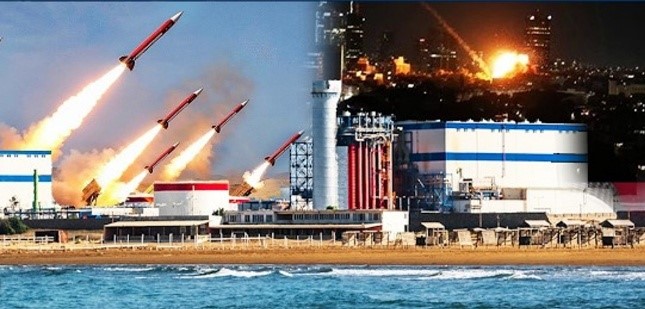
On April 3, 2026, the Kuwait Ministry of Electricity and Water reported an Iranian attack on an electricity and water treatment plant, causing material damage. This incident raised broader concerns about the potential for military targeting of desalination plants and their far-reaching consequences. Gulf countries, especially Saudi Arabia, the United Arab Emirates, Kuwait, Qatar, and Bahrain, face severe freshwater shortages and rely heavily on desalination plants. In many areas, groundwater is deeply depleted or saline, precipitation is low, and 70-100% of drinking and utility water comes from desalination.
But it should be noted that attacks on drinking water infrastructure in armed conflicts are not merely tactical military actions; they represent a systemic erosion of international humanitarian law and human rights norms. When water is under fire, what comes next? As a result, the international community and diplomatic efforts must intensify actions to prevent these facilities from becoming military targets.
Desalination Plants as Tools of Asymmetric Warfare
While desalination plants are civilian infrastructure, their strategic importance makes them urgent military targets. They can be attacked cheaply using drones, missiles, or sabotage. The impact can be immediate, devastating water systems, and triggering widespread panic with little warning. The consequences of even a single attack could rapidly escalate into a crisis.
Beyond immediate disruptions, ongoing water shortages have both physical and psychological effects. Targeting water infrastructure may not yield a direct military advantage, but it increases political pressure and weakens societal resilience.
Water and energy security are closely linked in the Gulf.
This connection is critical; desalination plants consume large amounts of energy and are often integrated with power plants. As a result, an attack on an energy facility can disrupt water systems. Both desalination and energy facilities are considered critical national security infrastructure, making water and energy security national priorities.
Moreover, energy and food systems also depend directly on water production. Destroying these facilities can have significant effects in asymmetric warfare. They should be regarded not only as infrastructure but as strategic survival assets, especially in water-scarce areas.
Can international Law protect water infrastructure
Under international law, drinking water infrastructure—including desalination plants—is recognized as critical to the survival of civilian populations. Article 54 of the First Additional Protocol to the 1949 Geneva Conventions explicitly prohibits attacks against objects indispensable to the survival of the civilian population, including drinking water installations and supplies.
However, as of June 2025, 175 states had ratified Additional Protocol I (API). Notable exceptions remain, including the three countries involved in the current war: the United States, Israel, and Iran. All three have recently targeted critical water infrastructure, highlighting a gap between legal protections and practice.
This issue is not new. Attacking water infrastructure, including desalination facilities, has been attempted repeatedly in the past decades. For example, in January 2025, Israel destroyed the northern Gaza desalination plant, demolishing its supply wells, intake pipeline, and power generators. In early March 2026, Israeli authorities disconnected Gaza’s South Sea desalinatio.... The Yemen-based Houthis struck desalination facilities at Al..., once in 2019 and again in 2022. Earlier still, Kuwait faced a catastrophic water crisis immediately following the 1990-1991 Gulf war, when the destruction of desalination infrastructure, along with Iraq’s decision to deliberately release oil onto Kuwait’s shores, rendered the seawater unfit for desalination. Kuwait relied on imported water from Saudi Arabia for years.
What happens if such attacks escalate?
If such attacks escalate, the consequences would be severe at both the regional water shortage and international human rights norm levels. The Gulf population depends on these systems. Most desalination plants are centralized, so losing even a few could quickly impact millions. Such attacks disrupt social stability, and with high water demand, reserves deplete rapidly, while alternative production takes time to establish.
Furthermore, intensive targeting of these facilities indicates a higher level of conflict and increased risks of expanding the war. Advances in missile and drone technology have made these sites more vulnerable. Attacks on such infrastructure may justify reciprocal strikes, escalating hostilities, and increasing the risk of internal unrest.
Attacks on drinking water infrastructure in armed conflicts are not merely tactical military actions; they represent a systemic erosion of international humanitarian law and human rights norms. Such attacks directly violate the right to life and to health, as well as broader principles of human security. The increasing frequency of these incidents indicates a structural shift in which water is being transformed from a shared resource into a geopolitical instrument and, increasingly, a weaponized asset.
What Should Be Done?
The prospect of water facilities in the Gulf becoming military targets is deeply concerning and raises fears of further escalation, including potential use of weapons of mass destruction. This trend has alarmed international law experts; over 100 have signed an open letter expressing ‘deep concern’ about serious violations by the US, Israel, and Iran in the current conflict. Building on these alarmed responses, advocacy efforts must be strengthened. To that end, UN water organizations, the World Water Council, and other international bodies should more effectively communicate that water must never be a military target. In addition, modern warfare has left water and energy infrastructure increasingly exposed and vulnerable to attack.
To address these escalating threats, countries must urgently heighten military precautions and rapidly construct modular treatment plants to reduce target size, minimize damage, and enable swift repairs—actions essential for national defense. In addition to such decisive national measures, it is vital to uphold and fiercely defend the right to water access internationally, both in war and in peace. Furthermore, institutions and organizations must intensify social pressure to prevent the catastrophic destruction of water facilities during conflicts.
If international efforts cannot prevent the targeting of water systems as military objectives, the world stands on the brink of losing significant advances in human rights—risking devastating setbacks that could define an era. The increasing normalization of such attacks reflects a broader normative regression, weakening of the civilian protection regime. This trajectory underscores the urgent need to reposition water not only as a resource to be managed but as a strategic asset requiring protection under both legal and geopolitical frameworks.
Dursun Yıldız(MSc.) is a hydropolitics specialist and the Director of the Hydropolitics Association, located in Ankara, Türkiye. He is a civil engineer and was formerly Deputy Director at the State Hydraulic Works in Türkiye; he completed a hydroinformatics postgraduate course at the IHE in Delft, a technical training program at the USBR in the USA, and a master’s degree in Hydropolitics at Hacettepe University, Türkiye.